AI Image Prompts for Editorial, Campaign and Listing Shots: Match the Image to Its Job
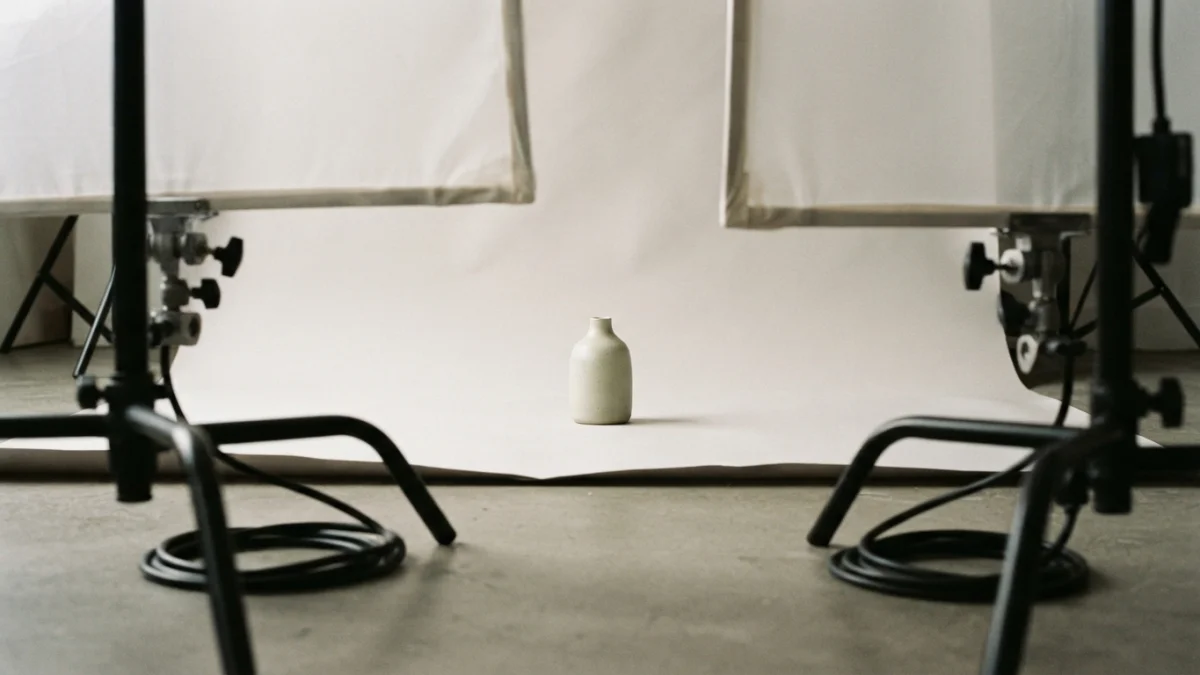
Image generated with AI.
A listing image has to be true, a campaign image has to mean something, an editorial has to tell a story. Name the job before you write the prompt.
A listing image has to be true, a campaign image has to mean something, and an editorial image has to tell a story. If you never name the job, these AI image prompts will hand you a beautiful photograph that fits nowhere.
The subject and the light can be identical in three images that have nothing to do with each other. What changes is the brief: who the image is for and what it has to achieve. That one fact decides three things - who the hero is, how far reality may be bent, and whose rules apply.
Why One Brief Produces Three Different Images
This is not a claim about how a model works inside. It is a fact of commercial work: an image is delivered to someone, and that someone has an expectation and, sometimes, a written rulebook. The typical failure is the pretty image that serves none of the three destinations - too theatrical for a listing, too flat for a campaign, too commercial for an editorial. The same actor can do an ad, a stage play or an interview; with no brief, they fall back on what they always do, which is act.
The One Line That Picks the Register
Before the prompt, write one line with three slots: the register (listing, campaign or editorial), who it is for (who sees the image and where), and what cannot change (the hard limit of that register). The model cannot guess any of the three, because none of them is in the scene: looking at it does not tell you whether the bag is being sold or illustrating a feature.
That line takes twenty seconds and sits above whichever prompt you use. One warning: a register named in a single word, like "editorial", is not a brief. Without the hard limit, the word only changes the adjective.
Prompt 1 - AI Image Prompts for a Listing Shot That Has to Be True
What the Prompt Returns
MJ Product Ad Backgrounds takes a product category and a colour, and returns a product photo on a clean background: a soft gradient with subtle paper texture, gentle light from the upper left, an elegant shadow, open space in the middle for the item, premium commercial look, no text. The prompt's own rules are studio backdrop, no props, no text, 4:5 ratio.
Whose Rules Are These? (Not Yours)
A listing is the register where someone else writes the rules. Amazon's product image guide asks for a main image on a pure white background (RGB 255, 255, 255), with the product filling about 85% of the image, no text and no extra logos. Google's image_link attribute for Merchant Center states the same idea from the other side: overlays, watermarks, added brand names and placeholders are out, because the main image has to show the product and not an advertisement for it. Read the current wording at the source before you publish: these documents change.
The Check, Outside the Prompt
Is the item the one that ships? If the image shows another colour, another material or an extra that is not in the box, the prompt overshot. And does it hold at the zoom a buyer actually uses? Nothing goes on top of the image: the discount badge belongs to the platform, not to your file.
Prompt 2 - AI Image Prompts for a Campaign Shot That Has to Mean Something
What the Prompt Returns
FLUX Advertising Campaign Shot takes the brand or the product, a campaign concept such as "freedom on the open road", a scene, the lighting and a palette, and returns an advertising campaign photograph: dramatic light, strong colour grade, shallow depth of field, high-end retouch look, cinematic composition with room for headlines, photorealistic, no text and no logo. The concept and the scene are required fields: this prompt does not decorate an object, it builds a world.
Why the Hero Changes
In a listing the hero is the item. In a campaign the hero is the world the brand sells - the trip, the morning, the freedom - and the product travels inside it. That is why the concept and the scene are required fields, and why text and logos are banned: the copy and the mark go on top, in the other layer. A different brief line for the same bag changes the whole scene, not the adjective.
The Check, Outside the Prompt
Put the message on before you approve. Place the headline or the badge over the image and see whether the photo survives with something written on it. If your eye never comes back to the product, the scene was decoration.
Prompt 3 - AI Image Prompts for an Editorial Shot That Is Not an Ad
What the Prompt Returns
MJ Fashion Editorial Shoot takes the garment, a styling direction such as "minimal 90s archive look", a backdrop colour and a pose, and returns an editorial photograph: solid colour studio backdrop, a single dramatic light with soft shadows, an 85mm lens at f/2.8, film colour grade, magazine quality, sharp fabric detail, no text, 2:3. Styling and pose are fields too; the subject does not carry the image on its own.
The Tell: Story First, Brand Second
What makes an editorial different is not that the photo is pretty. As StudioBinder explains in its definition of editorial photography, this register relies much more on story than on a brand, and its motive is to express and engage rather than to sell. In the prompt you see that in the weight that styling, pose, lens and ratio carry: 2:3 is a page, not a feed. The garment reads as material and as gesture, not as an offer. If the result looks like an ad, a colour grade will not repair the register.
The Check, Outside the Prompt
The spread test. Imagine the image with a long column of text beside it. If the only thing it asks for is a price underneath, it is not editorial; it is the listing we started from.
One Scene, Three Registers
Take one subject: a leather bag on a table at dawn. As a listing, the bag fills the frame on a light background, no props, faithful colour, and what is judged is whether it is the item in the box. As a campaign, the same table stands at the door of a car with low light coming in from the side, and what is being sold is the morning; the bag is an object inside that world, not a catalogue entry. As an editorial, someone is leaving the frame, the styling tells the decade and the format is 2:3; what is read is a story, and a price underneath would break it. The subject repeats. The brief does not. And the brief is the first thing you write.
What the Register Cannot Fix
The model does not know your brand, your platform or your customer. None of that is in the scene or in a manual it can read. The brief changes the prompt, but it does not remove the requirement that a listing image be true to the item. A platform rulebook changes over time and has to be read at the source, not remembered. And the best register is still the one you can verify.
Write the Line Once
Keep one brief line per destination, saved somewhere plain, each with its hard limit. When an image fails, the review order is short: does the register match the destination? Which of the three slots was missing - the hero, the limit, or the owner of the rules? Only then rewrite the description. An image gets rejected because of the brief, not because of its beauty.
FAQ
Can one image serve all three? Almost never. The hard limit of one register contradicts the next, and what the three can share is the material, not the file.
Do I need a different prompt per register? Yes, but not from scratch. The scene stays, and the hero, the allowed transformation and the rules change.
Which register forgives the most? The campaign, because it may invent the entire world. The listing forgives nothing: if the item is not the one that ships, no image is worth it.
Where do the platform rules live? In the platform's own help pages, not in a blog post. Cite them and check them the day you publish.
Name the Job Before You Write the Prompt
None of this needs new vocabulary. One line - register, audience, hard limit - and then the prompt that matches it: MJ Product Ad Backgrounds for a listing that has to be true, FLUX Advertising Campaign Shot for a campaign that has to mean something, MJ Fashion Editorial Shoot for an editorial that is not an ad. Write the brief first, and the image stops guessing.
LikePrompts Editorial
Practical guides for getting the most out of AI prompts — written by the LikePrompts team.