AI Product Descriptions at Scale: Structured Prompts That Sell
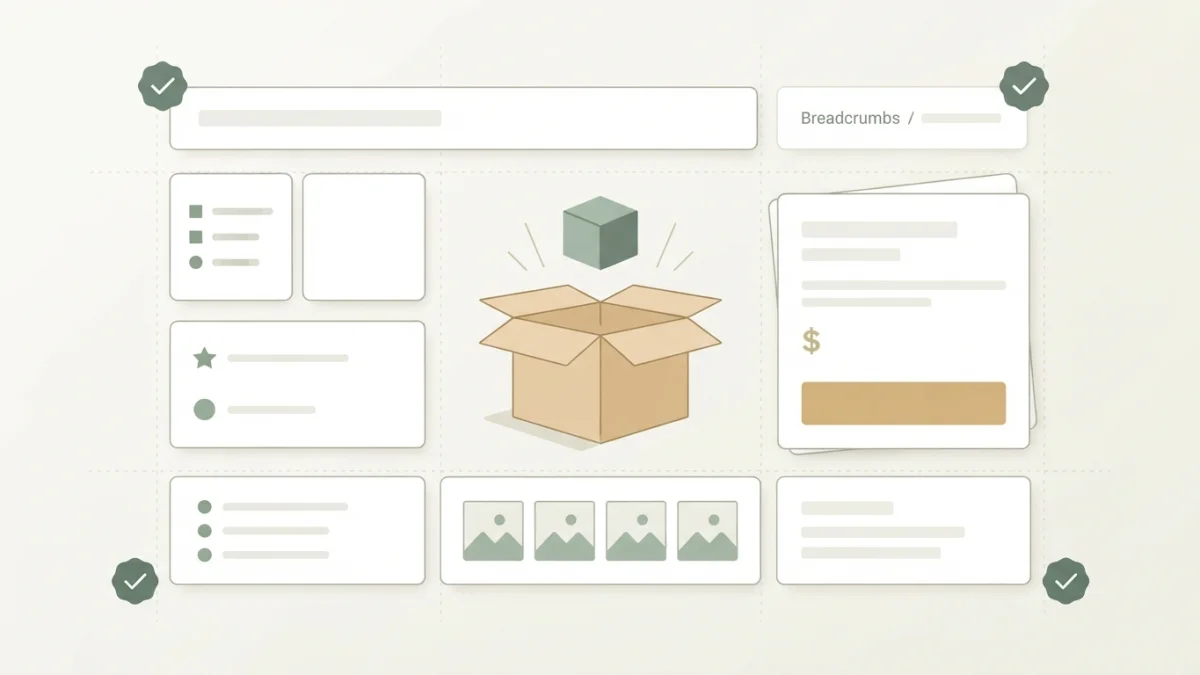
Image generated with AI.
Most AI product descriptions read like manufacturer spec sheets. Learn the structured prompt system that turns raw specs into benefit-led copy - and scales to hundreds of SKUs without losing your brand voice.
Generic prompts produce generic product copy. If your AI product descriptions read like a spec sheet, the problem is rarely the model - it is the prompt. This guide shows the structured prompt system that turns raw specs into benefit-led copy at catalog scale.
Why Generic AI Product Descriptions Fail
One-line prompts fail because the model has to guess who the copy is for and what to leave out. The output is technically correct and commercially useless.
The One-Line Prompt Trap
Most shared product description prompts online are single sentences: mention the materials, size, care, benefits, and ideal buyers, and write in a warm tone. Sellers copy them, paste a product name, and get back a paragraph that sounds like every other store. Many then conclude that AI cannot do this job. The real lesson is that a prompt with no role, no audience, and no rules cannot produce copy with a point of view.
What Shoppers and Search Engines Punish
Shoppers punish vague copy by leaving the page. Search engines punish it too: when thousands of stores publish the same manufacturer text, those pages are treated as duplicates and rank lower. A store with hundreds of SKUs is a giant surface for this problem.
The Anatomy of a Product Description That Converts
Conversion copywriting is designed on purpose: it leads with benefits, handles objections, and leaves a clear path to action. That is the core idea behind conversion copywriting, applied to a product page as much as to a landing page.
Benefit First, Feature Second
The classic rule is feature, then benefit, then proof. A feature is a fact: a 1.2 liter tank. The benefit is what it does for the buyer: fewer refills while cooking. The proof is why they can believe it: tested for 10,000 cycles. Some marketers report benefit-led descriptions generate up to 30 percent more sales than feature lists. Even as an industry claim rather than a study, the direction is consistent: buyers do not buy specifications, they buy outcomes.
Give Short and Long Descriptions Different Jobs
There is no universal magic length. SEO guides warn that too long loses the reader and too short loses keywords and detail. The practical pattern splits the work: a short description of about 50 words for fast scanning, a long description of about 200 words for detail and objections, and six bullets for features at a glance.
Make It Scannable by Design
Shoppers scan before they read. If key points are buried in a dense paragraph, most visitors never find them. Bullets and short paragraphs help a reader grasp the value in five seconds and dig deeper only if they want to.
Handle Proof and Objections
Objections are normal on a product page: the price is higher than a competitor, sizing is unclear, or the buyer doubts the fit. Strong descriptions answer those doubts before they are asked, with social proof such as short verified buyer snippets, a small FAQ, and a clear guarantee or return policy.
The Structured Prompt: A Full Product-Page System
Once the anatomy is clear, the prompt becomes an assembly line for it. Instead of asking for "a description," you give the model a role, the facts, the sections, and the rules.
The Anatomy: Role, Facts, Sections, Rules
Every structured product prompt has four parts. The role tells the model who it is, for example an e-commerce copywriter who writes benefit-led product pages. The facts are the structured inputs about the product: name, materials, dimensions, care, price, and the buyer. The sections are the numbered output blocks you want. The rules are hard constraints such as "never invent specifications" and "no superlatives without basis."
The Six Output Blocks
A complete product-page system asks for six outputs. Three name options: descriptive, benefit-led, and SEO-friendly. A short description under 50 words that leads with the benefit. A long description under 200 words in three sections: what it is, what it does for you, and when you will love it. Six bullets, each following the feature-benefit-proof line. Three social proof snippets without names. And a five-question FAQ with two-sentence answers. This exact structure is implemented in the ecommerce product page copy prompt, which you can adapt or use directly.
Hard Rules Beat Soft Suggestions
Models follow explicit rules more reliably than vague intentions. Say "never invent specifications; if a fact is missing, say it is missing" instead of "be accurate," and "write like a helpful expert, not a carnival barker" instead of "sound friendly." Hard rules keep output honest and make a template safe to reuse across a whole catalog.
Scaling From One Product to a Full Catalog
One great description is easy. A catalog of hundreds of SKUs is where workflows collapse. The scalable approach is one template per category fed with structured facts.
One Template per Category, Not One Prompt per Product
Custom prompts per product do not scale, and one generic prompt for everything destroys quality. The middle path is one template per category, the pattern that automation guides for AI product descriptions consistently recommend. The template fixes reading level, sentence length, banned words and claims, mandatory attributes, and tone with in-brand example phrases; each product only supplies its facts.
Start With the Spec Sheet
Structured facts prevent hallucinations. Feed the model a spec sheet - materials, measurements, care, buyer persona, price, allowed claims - and it stops guessing. The template should also tell it to flag missing information instead of inventing it.
Batch the Drafts, Keep the Review Human
AI accelerates the first draft, not the quality gate. The realistic workflow is AI draft, then human review in three passes: facts, voice, and format - especially for claims that could create liability.
Keeping One Brand Voice Across Hundreds of Pages
Catalog-scale copy has a hidden risk: even with a good template, the voice drifts as different products and people pass through. Voice drift makes a store feel like several stores glued together.
Document the Voice Before You Scale
Document the voice before the first batch: voice pillars and what they mean in practice, a tone scale for social, support, sales, and crisis, the vocabulary you use and avoid, and do and don't examples. It must be specific enough that a freelancer who never met the brand could write on-brand copy from it. That is exactly what the brand voice style guide prompt produces, and it doubles as the context block for every template.
Lock the Tone Into the Template
A voice document that sits in a drawer changes nothing. Lock the tone into the prompt itself with two or three in-brand example sentences inside the template. An open-ended prompt that anyone can edit freely is how voice drifts.
Why Unique AI Product Descriptions Are an SEO Asset
Beyond conversions, original product copy is a measurable SEO advantage. Most stores never think about it because the manufacturer already provided a description. The answer is duplication.
Manufacturer Descriptions Create Duplicates
Manufacturer copy appears on thousands of stores at once. Search engines treat that repeated text as duplicate content, and stores relying on it compete with every other store that did the same. Unique copy from the same facts is the reliable alternative, and AI drafting with editorial review makes it affordable at scale.
One Fact Base, Many Pages
The same fact base should feed many channels, not just the product page. A single product can generate the page description, a social post, an email, and a newsletter item, each written fresh for its context. The social media content manager prompt is a good example of this pattern in action. Unique copy per channel keeps every surface useful and the voice consistent.
Where to Go Next
If you sell on Etsy, Shopify, Amazon, or your own store, start with the structured template before you scale: the ecommerce product page copy prompt gives you the full six-block system ready to fill with your products. Pair it with the brand voice style guide prompt so your catalog sounds like one brand, and when you need to distribute that story across social channels, the social media content manager prompt turns each page into a month of posts.
Quick Takeaways
- Generic one-line prompts produce generic spec-sheet copy; the prompt is the problem, not the model.
- Lead with benefits, then features, then proof, and give short and long descriptions separate jobs.
- Structure every prompt with role, facts, sections, and hard rules.
- Scale with one template per category fed by a spec sheet, never one prompt per product.
- Keep human review in the loop: facts, voice, and format before publishing.
- Document the brand voice and lock example phrases into the template to stop drift.
- Unique AI product descriptions protect your SEO from manufacturer duplication.
LikePrompts Editorial
Practical guides for getting the most out of AI prompts — written by the LikePrompts team.