AI Wedding Prompts: Rehearse the Toast, Then Keep the Record Real
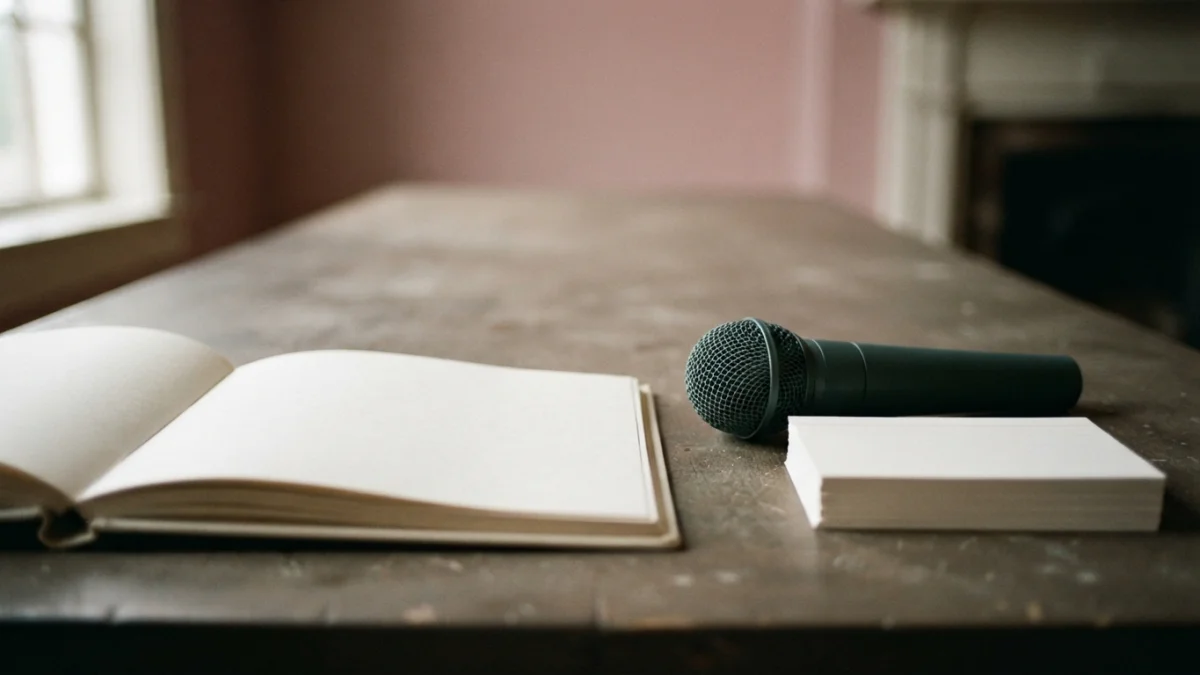
Image generated with AI.
Two selfies in, a dream wedding photo out - the tools promise the day without the day. The two prompts here do something narrower: shape a toast you can actually say and prototype the look, while the story and the frames stay yours.
The tools promise the day without the day: two selfies in, a dream wedding photo out. AI wedding prompts can do something much narrower, and far more useful.
A wedding leaves exactly two records: the words said in front of witnesses, and the frames of what actually happened - who was there, in what light, at what moment. A model can help with both, but only as rehearsal: the arc of a three-minute toast, and a visual direction for the album. What it cannot do is have been there. The rule this post ends on: rehearse with the model, then take the record with your own camera and your own facts.
A Wedding Produces Two Kinds of Record
The Rehearsal and the Record
A rehearsal is repeatable, correctable and disposable. A record is none of those things. You can run a toast in your living room at eleven at night and rewrite it four times; you deliver it once, in front of the people it is about. You can build a look-book and hand it to a photographer; the frames get taken once, in whatever light the day gives you. Tooling starts lying when it sells the rehearsal as the record.
The Two Catalog Prompts Admit This in Their Own Fields
Both prompts carry a field only a human can fill: the toast writer asks for a story about the couple in two or three sentences, and the image prompt asks for the moment to shoot. Neither says invent the story. Both ask you to bring the material and take care of the form, and that gap is the whole arc of this post.
AI Wedding Prompts, Step 1: The Toast Is a Rehearsal
What the Toast Prompt Actually Asks For
Start with the wedding speech and toast writer, built for ChatGPT. Its fields are the speech type - best man, maid of honor, father of the bride, mother of the groom, or the couple's own thank-you - the couple's names, your relationship to them, the date, a story about them in two or three sentences, an inside joke or a quality to highlight, a duration of three, four or five minutes, and the language. What comes back is a full draft with a strong first line (the prompt bans the "for those who do not know me" opener), two story beats, one sincere moment and a clean close, plus three alternative openers, personalization notes and a 30-second version. House rules: no cliches, no embarrassing material, seventy percent heart and thirty percent humor.
The Field Only You Can Fill
Of all those fields, one cannot be delegated: the story. A model writes the shape of a story, and if you feed it an empty field it fills the gap with something plausible. At a table of eighty people who were in the room, a plausible detail is a false detail with witnesses. So the rule falls out of the mechanics: if you cannot supply the story, do not write it and do not read it out.
Where the Draft Still Needs Your Hand
Family names and inside jokes go in by hand, which is what the personalization notes are for. The word-count check needs no statistics either: the prompt asks for minutes and words at once, so read the draft aloud with a timer, and if three minutes in you are halfway through the text, it is not a three-minute toast. The 30-second version is the artifact that actually gets kept. The model delivers the mold; the sentimental content comes from what really happened.
Step 2: The Photo Prompt Buys a Direction, Not a Memory
What the Photo Prompt Actually Says
The FLUX wedding photography style prompt has exactly one field: the moment, for example the couple sharing a quiet laugh during portraits. Everything else is a fixed recipe - documentary wedding photography, a 35mm film look with soft grain, natural golden-hour light, soft bokeh, genuine candid emotion, a timeless neutral grade with warm skin tones, elegant composition, photorealistic, no text and no watermark.
Why It Looks Real, and Why That Is the Trap
Read that list as a genre inventory: documentary framing, 35mm, golden hour, grain, candid. It is the visual signature of wedding photojournalism, and a model reproduces the signature with no event behind it. Photorealistic is a style, not evidence: the output will look like a wedding photograph and will not be one, and the difference does not show in the pixels.
Where a Generated Frame Cannot Live
A generated frame still has four honest uses - a look-book so a photographer understands the tone before the day, design for a save-the-date or a wedding website, a palette and light reference for a planner or a florist, and a way to learn the vocabulary of golden hour and film grain - but it cannot live in the album, the print set, the wall with the rest of the day, or any post that implies this is how it was.
One rule of our own follows from that: if an identifiable person would appear in the frame, do not generate their face. This is not a fringe worry. In February 2026, sixty-one data protection authorities, published through the European Data Protection Supervisor, issued a joint statement on AI-generated imagery, voicing concern about systems that produce highly realistic images and videos of identifiable individuals without their knowledge or consent. How they apply to one specific picture depends on where you live and publish.
One Clause on Ownership
One line on ownership, since the human-authorship question has been covered here before: the US Copyright Office guidance is that registration is for material carrying human authorship. Applied to a wedding, the frames you shot are yours; the frame the model generated is not.
The Order That Keeps Both Halves Honest
Facts First, Draft Second
Write a fact sheet before you open a chat window: names, your relationship to the couple, the true story in two or three sentences, the inside joke, the date, the minutes. Then the draft. Then the read-aloud. That order is all that stands between the model and an empty field it will happily fill with something that sounds right.
Three Checks Before You Speak or Post
Three checks, written as workshop questions rather than obligations. The fact check: can every line of the draft be traced back to something that happened? The witness check: does this line work only because the model invented it - if so, cut it, because the room will not have the context it was built on. The label check: before posting a generated frame, would a guest assume it was taken at the wedding - if so, call it an illustration or do not post it. The whole sequence fits in one afternoon.
What the Model Cannot Do at Your Wedding
It does not know what happened, or who was in the room, or which joke lands with this family, or the light in the hall. It cannot decide for you whether the people inside a frame agreed to appear in one. And its rules - no cliches, no embarrassing material - govern tone, not truth: it will not flag a false detail, because it cannot know which detail is false. This post is a prompting guide, not legal or intellectual property advice. Which disclosure, privacy or usage rules apply depends on where you publish and on whether identifiable people are involved, and those questions belong with the official sources linked above.
Rehearse First, Then Take the Record
Use the two prompts in order. Draft the toast with the wedding speech and toast writer, put something true in the story field, then time it out loud. Build the look-book with the FLUX wedding photography style prompt and hand it to whoever takes the pictures. The job-search prompts post covers the same trap in a different room. Let the model carry the form and the light; the story and the frames stay yours.
LikePrompts Editorial
Practical guides for getting the most out of AI prompts — written by the LikePrompts team.