AI Image Lighting Prompts: Choose the Light Instead of Inheriting It
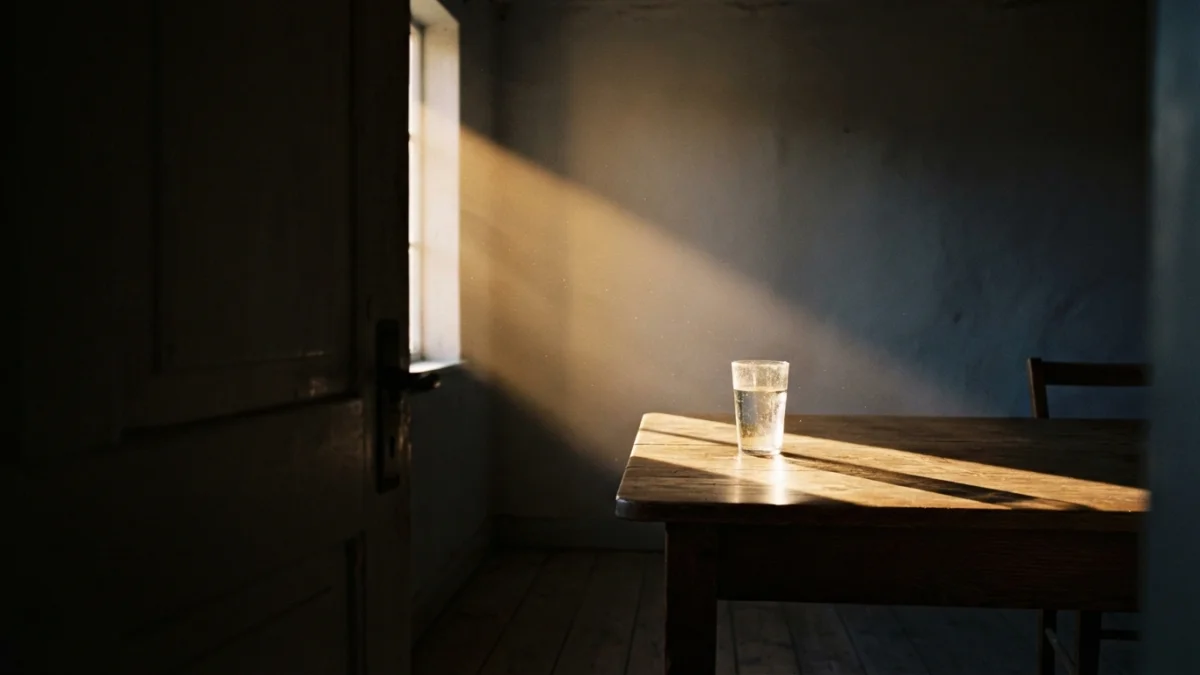
Image generated with AI.
Your AI image is already lit - by a default you never wrote. Name the source, the direction and the color, and the flat look goes away.
Nobody writes "flat, frontal light with no source" in a prompt, yet that is what most generated images get: if you never name the light, something else names it for you. Working with AI image lighting prompts means choosing it yourself, on three dials, instead of inheriting a default.
The Light You Never Wrote
Every generated image is lit. The question is not whether light exists in the frame, because it always does, but whether that light has a source you could point at. A default light fails that test in a recognizable way: everything is evenly bright, shadows have no direction, the brightest spot does not correspond to anything in the scene, and the result carries that ambiguous "AI look" people usually blame on style.
Generate the same prompt twice, identical in every detail, and change one thing in the second run: add a single sentence that describes the light. Then compare three observable properties side by side. First, which way the shadows fall. Second, how sharp the shadow edge is. Third, whether you can point a finger at what is emitting the light. Nothing here claims anything about how a model handles light internally; it is a procedure you can judge for yourself.
How AI Image Lighting Prompts Fail: Three Dials, Not One Word
The phrase "cinematic lighting" is not a light. It is a mood label, and it says nothing about direction, source size, or color. Those are three independent dials, and you can set one correctly while leaving the other two at their default, which is exactly how you end up with an image that is almost right.
Dial 1 - Where the Light Comes From
Direction decides form: light arrives from somewhere, and the shadow runs away from it. Simply naming a side already changes the result, whether that is from camera left, from the right, or backlit. The default is usually frontal and centered, which is precisely the direction that flattens volume, because there is no visible side for a shadow to fall toward. A backlight combined with a rim light separates a subject from its background, while a lateral window light is what reveals texture.
Dial 2 - How Hard the Light Is
Hard and soft is not an adjective, it is a size. The softness of light depends mostly on three properties of the source: the size of its surface, its distance from the subject, and the thickness of its diffusion material, as the reference article on hard and soft light sets out. A small or distant source produces a shadow with a crisp edge; a large or close one produces a gradual transition. That is why "soft light" on its own does not hold up: what exactly is the soft thing?
Dial 3 - What Color the Light Is
Color temperature has numbers behind it. Daylight-balanced film sits at roughly 5500K, an ordinary household bulb at about 2700K, and dusk well past 8000K. Effects of Temperature of Light shows the mechanism with two photographs of the same room: the white walls read orange under the bulb while the light coming from outside reads deep blue. The useful part is that contrast, not the number itself. A whole scene that is warm, with nothing cool to sit against, looks washed out.
Motivation: Point at the Thing That Makes the Light
The rule that organizes the three dials comes from film. In motivated lighting, every light added is justified by a credible source inside the scene, whether that is sun through a window, a table lamp, or a car's headlights, and its direction, color and intensity have to agree with that source. Applied to a prompt it becomes a one-line test: name the source, then say where it is. If the honest answer is "because I wanted it to look good", the light is invented, and the image reads that way.
In the store, three of the prompts below pass this test in writing: a window, a golden-hour backlight, a key light from camera left. Naming the light is not a stylistic accident; it is the difference between a setup and a guess.
Read the Light Before You Write the Prompt
Take an image you actually like, whether it is your own photo, a reference, or a generation that worked, and answer three questions about it in this order. First: which way do the shadows fall, and how sharp is their edge? That gives you direction and hardness together. Second: what is the brightest point, and what shape is it? A window is a rectangle, a bare bulb is a point, an overcast sky is the entire frame. Third: what color is white? If white reads orange you are under tungsten; if it reads blue you are in shade or at dusk.
Only then write the lighting sentence, and write one of them. The official Midjourney prompt basics guidance notes that short and simple prompts typically generate the best images, and that long lists of detailed instructions tend to confuse the process. Stacking five lighting terms is the fastest way to make sure none of them wins.
Three Prompts From the Store That Name Their Light
The mechanics are the same across the catalog: fields go in, a deliverable comes out, and the light is one of the decisions encoded in the text.
A Time and a Direction: golden hour backlight plus a warm rim light
Cinematic Portrait - Golden Hour names the light twice, and both halves do work: a time, golden hour, and a direction, backlight, plus the effect that follows from them, a warm amber rim light that separates the subject's edges from the background. It also carries what accompanies that light in real life, from focal length to film grain to a Portra-like palette, which is why golden hour looks the way it does rather than merely warm.
Two Sources and a Hardness: the key light and the fill
FLUX Photorealistic Portrait does not use one light; it uses two and specifies the relative size of each. A soft diffused key light from camera left is large and diffused, and therefore soft, with a subtle warm fill that lifts the shadow without erasing it. It is the clearest example of dial 2 in the catalog, and the only one that also writes down what the light gives away: realistic eye reflections, no plastic skin.
A Window You Can Point At: the motivated source
MJ Food Styling Photography names a concrete source and its side, soft window light from the left. The window is the motivation and the direction follows from it, not the other way around. In food, that lateral light is what reveals texture and steam, and it is the cleanest illustration of the rule about pointing at the source.
One Light, One Series
When a series uses a different light in every piece, none of the pieces looks like it came from the same session. Continuity does not come from repeating "cinematic lighting" everywhere. It comes from carrying the same lighting sentence, such as window on the left, or golden hour, or key from the left with a warm fill, and the same implied hour through the whole set, with the subject changing and the light staying still. That is what a brand style lock does on a wider scale, applied here to light alone. A quick test for a finished set: put the pieces next to each other and check whether any single one has a light that came from nowhere.
Choose the Light, Don't Inherit It
A model can hand you an image in seconds, with or without your help. What it cannot hand you is the reason for that light. Naming the source, the direction and the color takes one sentence, and it is the difference between a picture that happens to be lit and one that was lit on purpose. If you want a head start, Cinematic Portrait - Golden Hour and FLUX Photorealistic Portrait both write their light out in full. Open either one, read the lighting clause first, and copy the structure rather than the words.
LikePrompts Editorial
Practical guides for getting the most out of AI prompts — written by the LikePrompts team.