AI Prompts for Fantasy Art: Make Scale Feel Real in Two Images
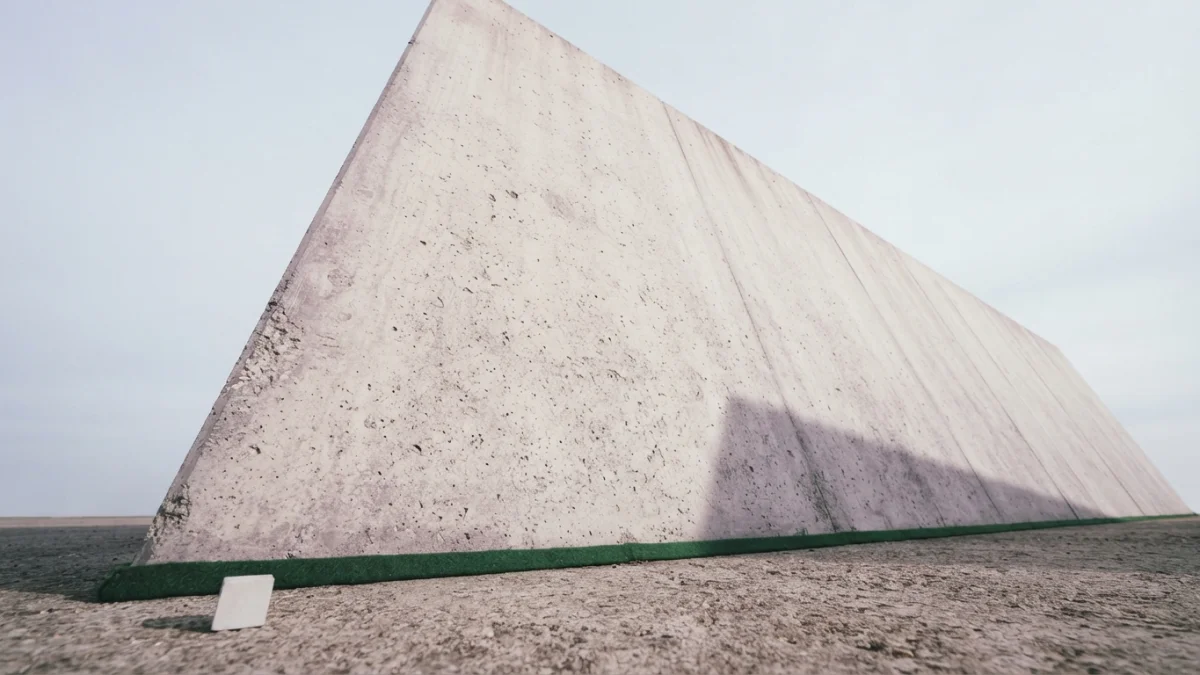
Image generated with AI.
An AI dragon can come out the size of a dog and a vast valley can read like a postcard. Scale is not extra detail - it comes from a reference the eye can measure, plus depth and light. Two FLUX prompts, three levers, one world.
A dragon can come out the size of a dog, and a valley that should stop your breath can read like a postcard. AI prompts for fantasy art rarely fail on detail - they fail on scale, because nothing in the frame gives the eye a ruler.
Scale is a relation, not an attribute: the eye works out size by comparing what it sees against something of known size, and by watching how the frame recedes. Both prompts below write that ruler into the scene - one for a creature, one for a world.
Why a Huge Subject Reads as Small
Knowing why the picture feels wrong matters, because "make it bigger" is not a setting you can turn up.
Nothing in the Frame Has a Known Size
A spectator measures by comparison. If everything visible is of unknown size - an invented creature, an invented cliff - there is no unit of measure anywhere. "Huge" is an adjective without a referent: the model renders it as drama or as a wide sky, never as a relation. A reference of a known size turns the adjective into something the eye can compute.
Everything Sharp, Nothing Receding
The usual defect is not too little detail, it is even detail: foreground and background at the same sharpness, so the image sits on one flat plane. Distance is what happens to objects as they recede - less contrast, cooler tones, softer shadows, less definition. The National Gallery's glossary calls this aerial or atmospheric perspective, noting that a landscape's colours and tones alter as it recedes because of the atmosphere. No depth bands means no far away - and no far away means no enormous.
Step 1 - AI Prompts for Fantasy Art Need a Ruler in the Frame
Start with the creature. A fixed prompt gives you fewer places to intervene, which makes it the better place to learn where the leverage lives.
What the Dragon Prompt Actually Says
Fantasy dragon, oil painting style is fixed and has no fill-in fields: an epic dragon perched on ancient ruins, in oils, under dramatic clouds, lit by warm torchlight, with detailed scales, classical composition and museum-quality finish. With nothing to fill in, the method changes - you edit a few words instead of rewriting the scene: the creature that perches, the structure beneath it, where the light comes from, and the medium. If you need the anatomy of an image prompt, the four slots are covered in the prompt anatomy breakdown; this piece assumes them.
The Ruins Are the Ruler
The strength of the prompt is not the word "epic". It is the ruins: a wall, an arch and a pillar are objects of known size, so a creature standing on human architecture gets measured against it without any sentence claiming it is enormous. The torchlight finishes the job, lighting one short zone and dropping the rest into half-shadow, so the viewer has to reconstruct the distance in between. That reconstruction is what makes a scene feel large.
Medium Words Are a Choice, Not Filler
Phrases like "oil painting style" and "museum quality" push the result away from the default 3D render. The official FLUX prompting guide opens with how the model reads a prompt - structure, word order, and what actually carries weight. Keep the medium vocabulary beside the size reference, never instead of it.
Step 2 - One Traveler Carries the Whole Landscape
The second image does the opposite job: make a whole world feel big, with exactly one field to type into.
The Scene Field Is Where You Work
FLUX Epic Fantasy Landscape takes a single input: the scene, for example floating mountains above a misty valley with an ancient bridge. The rest is fixed and reads like a recipe for scale - painterly digital style, dramatic scale, a tiny lone traveler for contrast, volumetric light rays between clouds, detailed foliage and rocks in the foreground, layers of mist and atmosphere, cinematic composition, matte painting quality. Matte painting, in its film sense, means a painted representation of a distant location used to create the illusion of an environment not present at the filming location - exactly the trade this prompt performs.
The Lone Traveler Is Not Decoration
The tiny figure is the ruler of the picture. The rule: exactly one, small, off-centre, low and to the side, with a shadow tying it to the ground. Floating figures stop working as a reference, and three figures do too, because the eye stops reading a scale cue and starts reading a composition mistake.
Mist Layers and Foreground Detail
The prompt asks for three bands at once: foliage and rocks in front, mist in the middle, silhouettes behind. That is atmospheric perspective written as instructions. So when your landscape looks flat, do not ask for more detail - ask for layers: haze, mist, light rays, separate depth planes. More texture inside one plane only makes that plane busier; more planes is what makes it deep.
Step 3 - The Three Levers You Still Have to Pull
Both images answer to the same three controls. Pull them on purpose, or the model pulls them for you, badly.
1. A Reference of a Known Size
Ruins, doorways, fences, boats, trees, animals, people. Two failures to name: zero references, which leaves nothing to measure against, and two incompatible references, which is how a creature covers a doorway in one frame and towers over it in the next. Which reference you choose is a story decision - a ruined arch says medieval city, a cargo ship says this thing is the size of a district.
2. Depth Instead of More Detail
A background as sharp as the foreground flattens the frame. The words that buy depth are cheap and concrete: mist layers, light rays through clouds, a dark foreground, distant silhouettes. If everything is equally detailed, nothing is far away - and if nothing is far away, nothing can be truly large.
3. A Camera That Says "Small Viewer"
Point of view measures too. A low angle looking up, a wide lens, a low horizon and a subject filling the frame height place the viewer at the foot of something. An eye-level shot with a centred horizon gives you the poster look instead. You are not describing the object; you are describing where the person stands while looking at it. All three levers work the same way for a creature and for a landscape, which is why you can run both prompts on the same afternoon and compare.
Two Media, One World
The pair does not share a medium: one is classical oil, the other painterly digital with a matte painting finish. Either copy the medium words into both prompts and freeze the constants of the place - palette, era, time of day, light direction - or keep those constants locked while the technique differs on purpose. What fails is changing medium, palette and light at once and expecting the same location.
What the Model Cannot Decide For You
An honest scope note. The model cannot know what is actually large in your story: if the creature is meant to be the size of a city, ruins are the wrong ruler, and only you can pick another. It does not guarantee that size relations stay consistent between two images - it can hand you a beautiful piece with a traveler the height of a tower. Nor does it decide where you may use the result: usage rights, the rules of the platform you publish on and AI disclosure are yours to check. This is prompt guidance, not legal advice - review the terms of use and disclosure rules of wherever you publish. And it does not sign for you: no likenesses of real people, no style of a named living artist, no creatures you lack the rights to.
Run the Two Prompts, Then Compare
Start with Fantasy dragon, oil painting style and edit only the creature, the structure it stands on, the light source and the medium. Then run FLUX Epic Fantasy Landscape and change only the scene field, keeping the mist, the lone traveler and the foreground detail. Put the results side by side: if one reads as enormous and the other does not, the difference is in the reference, the depth bands or the camera, never in how dramatic the words sound. Size is not requested. It is measured - and what you place in the frame to measure it against is your decision, not the model's.
LikePrompts Editorial
Practical guides for getting the most out of AI prompts — written by the LikePrompts team.